

Kupid AI Voice Call: What Actually Works in 2026
The Voice Call Scorecard: Kupid vs GoLove.ai
Kupid's voice call sounds like a real person for about four minutes. Then you hang up, open the chat, and it's like the call never happened.
That's the whole review in two sentences. You're here for the breakdown though, so here's the scorecard on the rows that actually matter when you're shopping specifically for voice.
| What matters for voice intent | Kupid AI | GoLove.ai |
|---|---|---|
| Launch friction | Account + email verification before the call button works | Instant chat entry via Explore, voice-call from inside the thread |
| Free voice allowance | Capped trial minutes, then a hard paywall | Free tier + 2 free Stars per day |
| Raw call naturalness | Narrow win — purpose-built call product | Live real-time voice calls, close behind |
| Call → chat memory | Siloed, in practice | Memory carries across chat, voice and photos |
| Same context into photos/video | No | Yes — request photos in the same thread |
Real talk — the naturalness row is Kupid's only win, and it's narrow. Everything else goes to GoLove, because it's the only one of the two where a call, a chat, and a generated photo all reference the same relationship instead of three separate silos.

Jessica (@HotlineJess) is one tap from a live thread — no confirmation email, no onboarding wizard. Pick someone now and you'll be mid-conversation before Kupid finishes verifying you.
Weighing more than these two? Here's the AI girlfriend apps I compared for calling specifically.
Getting Kupid on the Phone: Signup Required First
Look, the first data point in any voice-call review isn't the voice — it's how long it takes to hear it.
Kupid gates the phone icon behind a full account. Email, verification link, password, and typically a short onboarding flow (preferences, character pick, the usual) before the call control becomes tappable. Nothing exotic about any of it. But that's four or five steps and one round-trip through your inbox before you know whether the thing sounds any good, and if your provider is slow, you're sitting there hammering refresh.
GoLove runs anonAuth-style instant access. Open Explore, tap a character, and you're in a live thread — no confirmation email, no wizard. Voice calls, voice messages and photo requests all sit inside the conversation you already started.
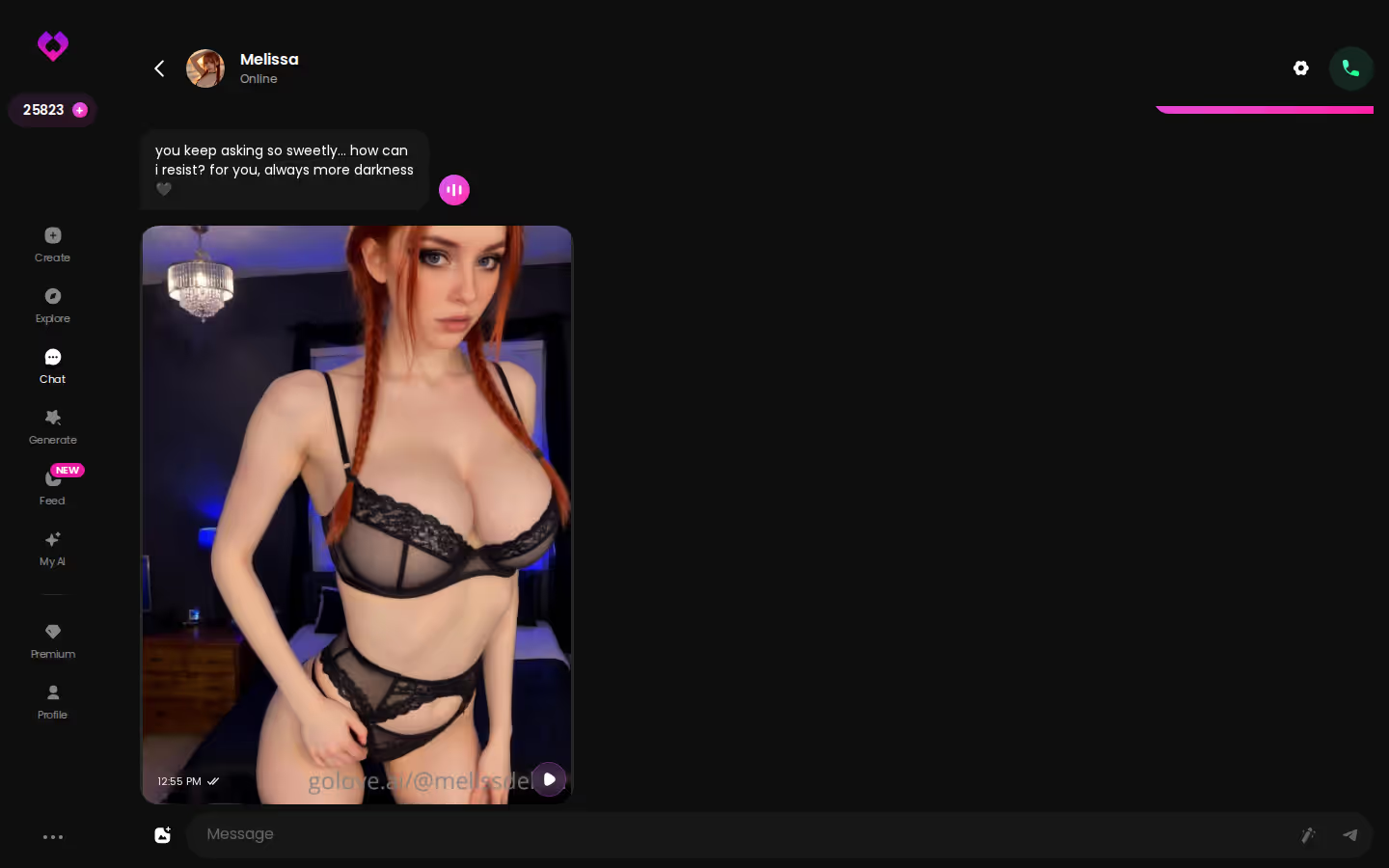
Straight up: you can be in a working GoLove conversation before Kupid's confirmation email lands. Not a small thing when you're evaluating five apps in one evening and half of them want your inbox first.
How Kupid's Voice Actually Sounds on a Call
Credit where it's due — the voice model is actually decent. Not mid, not obviously synthetic. Intonation rises and falls in the right places, there's breath in the delivery, and short replies land fast enough that the first minute or two genuinely reads as a phone call rather than a text-to-speech readout with a phone skin on it.
The cracks show up in the seams. Longer replies come with a noticeable gap before audio starts — the generate-then-speak pattern, where the whole response is written before a single word is spoken. Short exchanges hide it. Ask something open-ended and you get the pause, then a fully-formed paragraph delivered in one uninterrupted block. Talking over it is where the illusion drops hardest: it doesn't yield, it finishes the sentence it committed to.
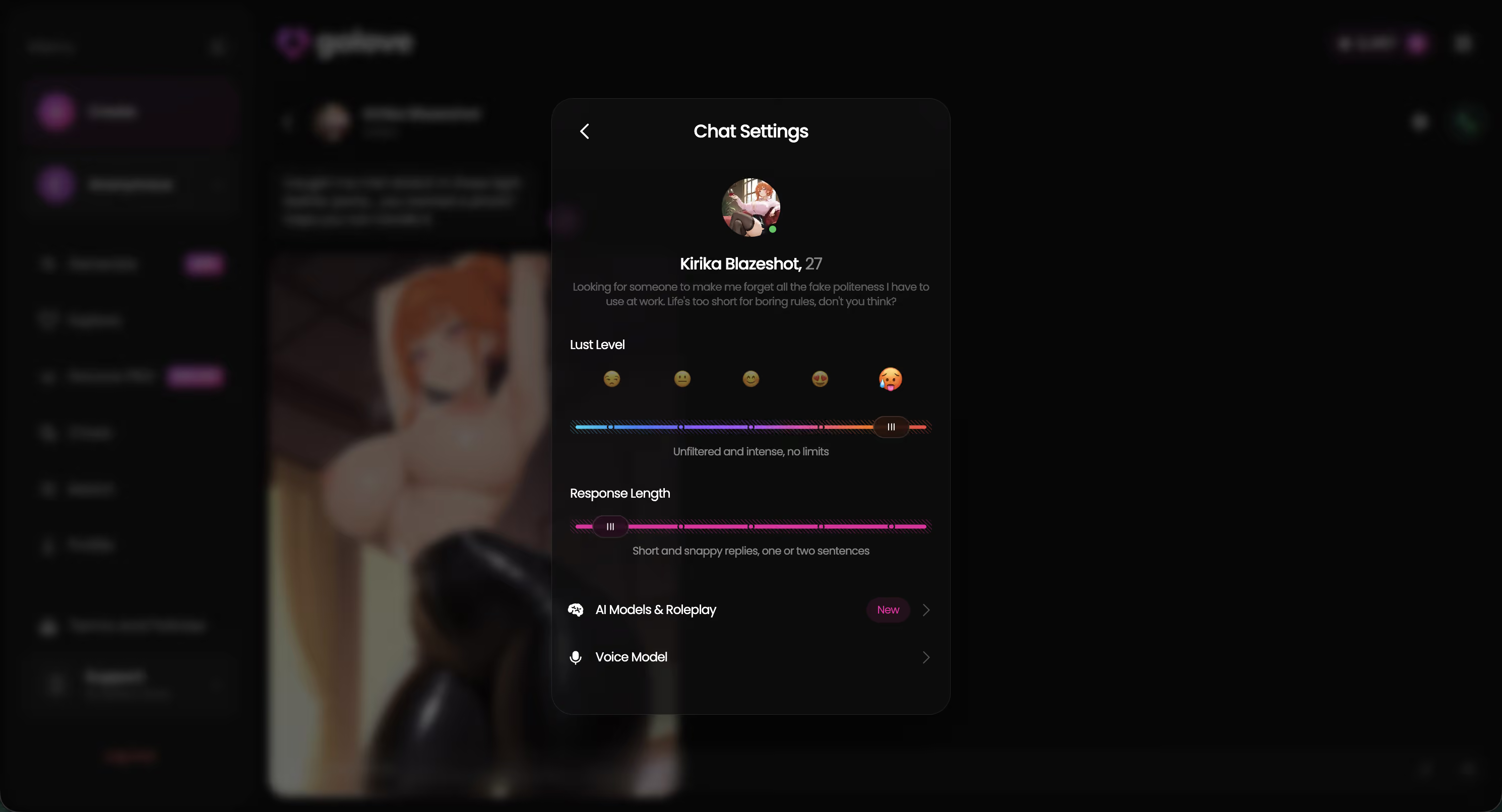
So Kupid's audio is fine, and honestly, fine is enough for the call itself. But nobody comparing companion apps on this keyword is asking "does it sound good" — they're asking whether the call is worth paying for, which is a pricing question and a memory question. A nice voice doesn't solve either one.
Kupid's Pricing: You're Paying by the Minute
Here's where voice apps get expensive quietly. Text is cheap to serve, so apps hand out messages freely. Voice isn't, so it gets metered — and Kupid meters it.
The structure to check on their pricing page before you commit:
- Free tier — a small trial voice allowance, then the call control greys out. It exists to prove the voice sounds good, not to be used.
- Subscription — unlocks calling, but with a monthly minute cap rather than unlimited talk time. This is the number to hunt for, and it's the one nobody's review states.
- Top-ups — once the cap is hit, extra minutes are bought separately. This is where occasional users and daily callers split into completely different price brackets.
A twice-a-week, ten-minute caller stays inside the base subscription. Someone calling nightly for half an hour blows the cap in the first week and pays subscription plus top-ups every month after. Same plan, wildly different bill.
For contrast on structure, not superiority: Character.AI's c.ai+ runs about $9.99/month with unlimited voice calls but zero NSFW, and Replika gates calls to paid tiers from about $19.99/month. GoLove PRO sits around $19.99/month, or about $119.88/year (~$9.99/month), with Stars for generation on top — regional pricing is real and promos run often.
Prices checked 2026-09; promos vary — confirm on each site before paying.
The Trade-Off You're Making With GoLove.ai
Real talk — if you pick GoLove for the memory, you're giving something up, and it's not nothing.
Kupid built the phone-call metaphor as its core product, and that focus shows in the small stuff. The connect sequence has a ring-and-answer feel. There's a dedicated call surface with its own history, so calls are a first-class object you can look back at rather than an action taken inside a chat thread. It's the difference between an app designed around calling and an app where calling is one of several things you can do with a character.
GoLove treats voice calls as one mode among Chat, Voice Messages, Photos, Videos and Live Mode — all living in the same conversation. That's a design choice with a cost: less call-specific ceremony, no separate call log to scroll.
Weigh that against what you're buying, though. Kupid's polish decorates a call that ends and disappears. GoLove's approach means the call is part of one continuous relationship — the memory and progression system doesn't care which mode the context came from.
Ceremony is nice. Continuity is the product.
Does the Call Remember You After You Hang Up?
Here's the test that decides this whole comparison, and it takes about ten minutes to run yourself.
Start a voice call. Mention something specific and checkable — a job, a city, a plan for the weekend. Nothing subtle, something a human would obviously retain. End the call. Open the text chat with the same character and ask about it directly.
On a siloed system, you get a blank. Not a refusal — worse, a confident answer that has nothing to do with what you said out loud. The voice layer and the chat layer are running against different context, so the chat has no idea a call happened. Now run it backwards: establish a detail in text, then call and reference it. Same problem in the other direction. Two channels, one character, zero shared state. That's the memory silo, and it's why Kupid's four good minutes evaporate.
GoLove's Memory is listed as a core feature alongside Chat, Voice Calls, Voice Messages, Photos and Relationship Progression — one relationship, several modes. Which means the third step works too: mention an outfit or setting, then request a photo in that same chat and it generates against the context you built. Voice → chat → image, one thread.
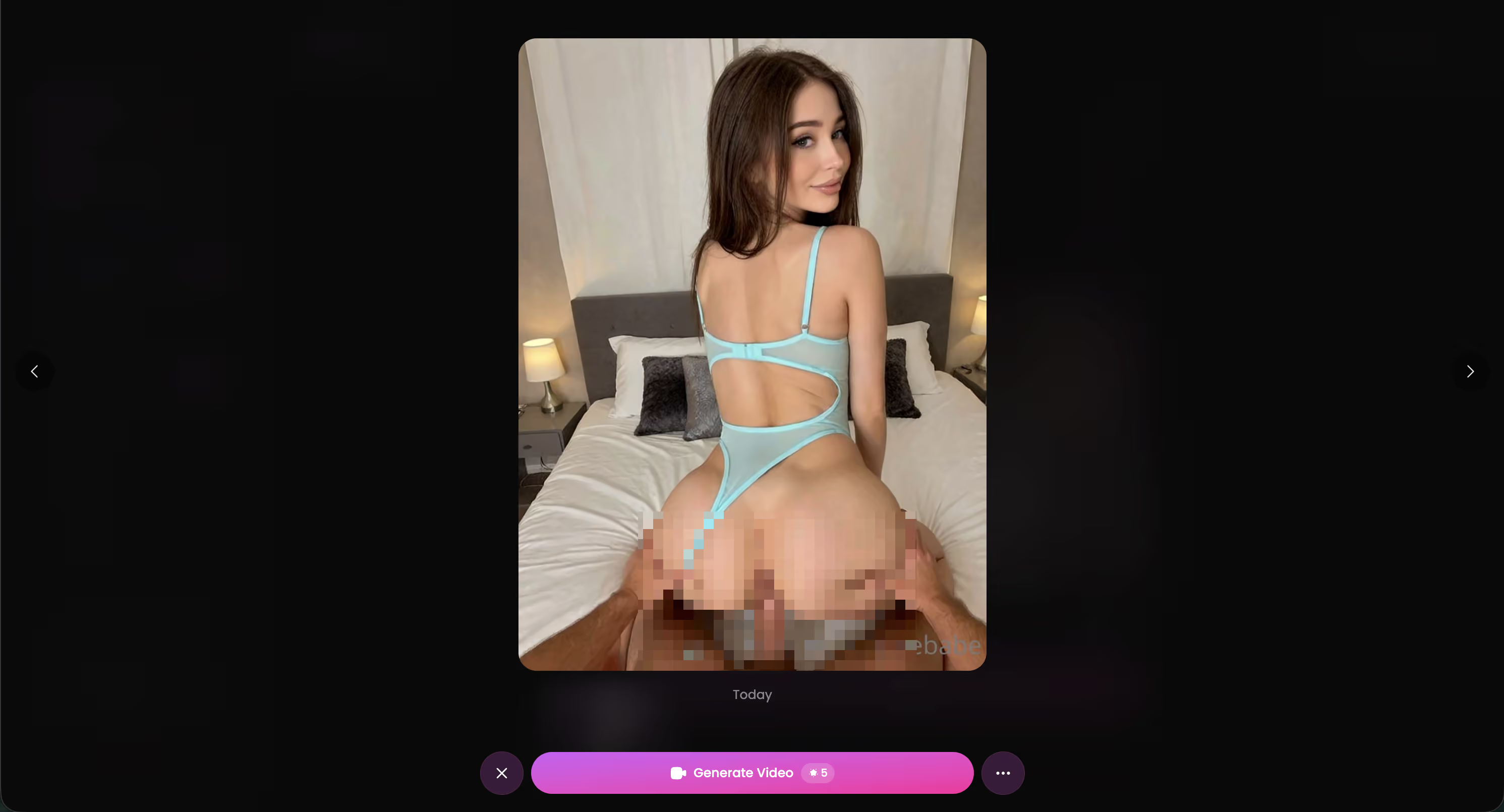
That third step is the part no competitor in this comparison does. Build a character now — pick her look, personality and voice — and every call after that adds to the same memory instead of resetting it.
Verdict: Kupid's Call Feature Works, GoLove's Memory Wins
The one-liner: Kupid makes a good phone call. GoLove.ai makes a relationship that a phone call is part of — and that's the pick.
Kupid is for you if: you only ever want the call. You're not building anything, tomorrow's chat doesn't need to know what you said tonight, and you just want to dial in, talk for a while, hang up, repeat. The voice is genuinely decent and the call UI is the most considered in this pair. If that's the entire use case, it delivers — just budget for the minute caps, because nightly callers and weekly callers pay very different amounts on the same plan.
Pick GoLove.ai instead if: you want the call to matter afterward. That's the scorecard row that flipped four of five categories — instant access with no email gate, a free tier with 2 free Stars a day, and memory that carries from voice into chat into a generated photo instead of three disconnected silos. Kupid won exactly one row, narrowly, on raw call naturalness. Everything else went the other way.
Same character, same memory, whether you're typing, calling or asking for a photo. Start with the roster and pick someone whose personality you'd actually want on the phone.
Verdict box
The short version: GoLove.ai covers the essentials in one place — live voice calls, memory across chats, and in-chat photos (35 poses, 21 outfits) — and the 2 free daily stars mean you can test it before spending anything.
| What you get | GoLove.ai |
|---|---|
| Real-time voice calls | Yes — per-character voices |
| Memory across chats | Yes — remembers your details |
| In-chat image generation | Yes — 35 poses & 21 outfits |
| Daily reward stars | 2 every day |
Frequently Asked Questions
Related Articles

AI Girlfriend Memory & Progression: Honest 2026 Verdict
AI girlfriend memory and progression, compared side by side — GoLove keeps real chat history and unlocks actual photos/video as you level up.

Talkie AI Voice Call Review: Why Voice Continuity Wins
Talkie AI voice call review: charming but scripted — GoLove.ai remembers you between calls and talks back for real. Instant-access needed to explore.

CrushOn AI Voice Call: What Actually Works in 2026
CrushOn AI's voice call is turn-based TTS, not live conversation — GoLove.ai pairs real-time voice with photos and video. Compare before you pay.

Eva AI Voice Call Review: What Actually Works in 2026
Eva AI voice call review: GoLove.ai wins on live-voice flow and cross-chat memory — see where Eva's minutes run out. Instant-access needed to compare.